
Request project information
Tulcea County, Romania · 2026

Three projects.
One county.
One operator.

A concentrated portfolio of utility-scale solar, onshore wind and solar-plus-storage — open to investment, asset acquisition or development partnership. One asset is already permitted and ready to build.

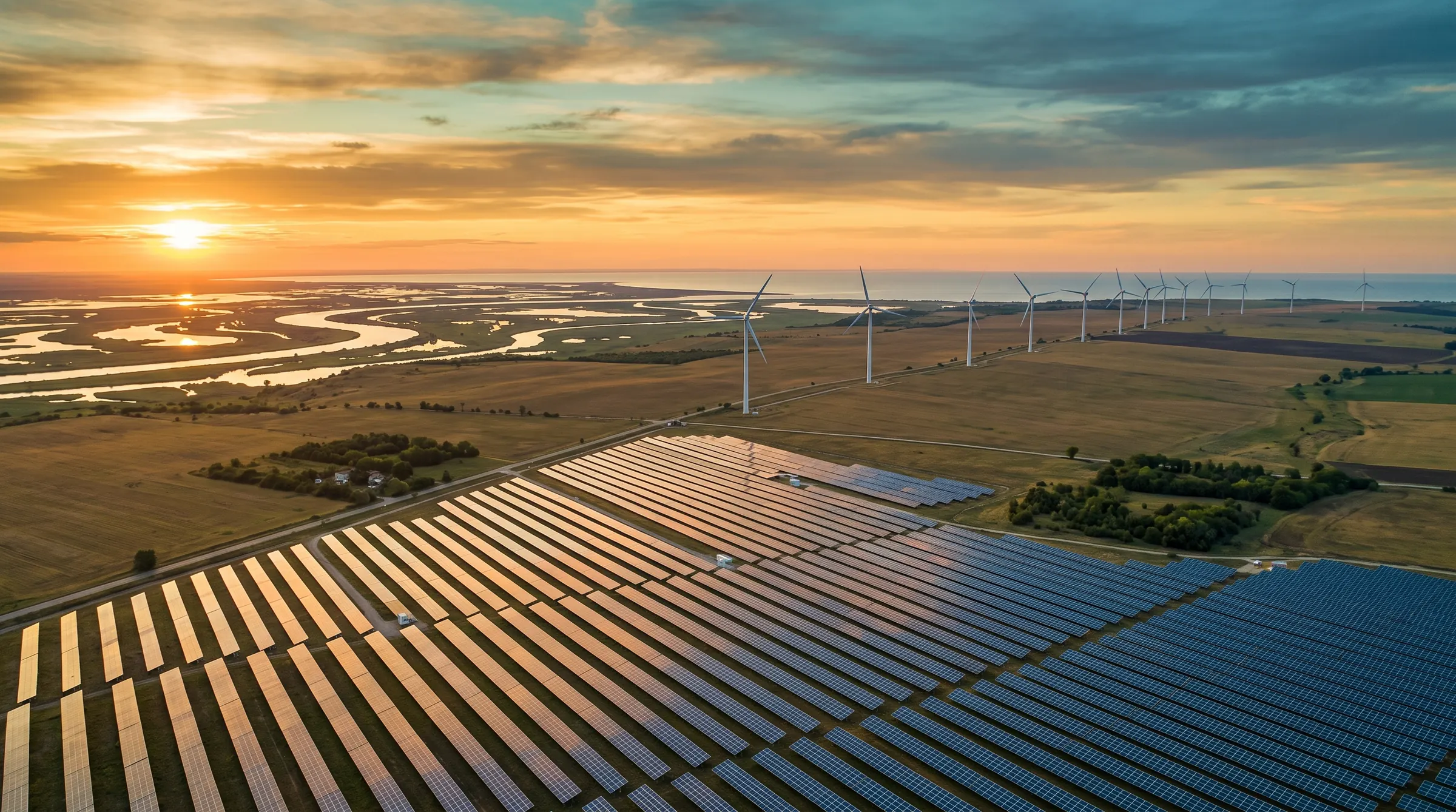
Solar arrays and wind turbines across open terrain in south-eastern Romania at golden hour
Wind capacity
151.8MW
23 turbines · Tulcea Wind
Battery storage
1GWh
I.C. Brătianu energy hub
Permitted, ready to build
23.76MW
Niculițel Solar · Phase I
Target IRR range
16.7–29.9%
Across the three projects
01 — The opportunity

In a 91-gigawatt queue, almost nobody has crossed the line.

Romania has more renewable projects on paper than almost any market in Europe. Very few of them have the permits that turn a project into an asset.

As of 1 June 2026, the Romanian regulator ANRE recorded 91.1 GW across 1,530 renewable projects of 1 MW or more holding a valid grid connection permit. That number is often quoted as the size of the pipeline. It is not the size of the opportunity.

Follow the same projects down the funnel and it narrows fast. 55.1 GW hold a signed grid connection agreement. Only 31.4 GW hold both that agreement and a building permit. And only 10.8 GW carry an ANRE establishment authorisation on top.

Niculițel Solar has held its Phase I grid connection permit and its Phase I building permit since October 2023. It sits in the 31.4 GW tier — the third of the pipeline that has actually cleared the regulatory work. Two out of every three gigawatts in Romania have not.

Valid grid connection permit (ATR) — 91.1 GW across 1,530 projects Valid grid connection permit (ATR) 1,530 projects 91.1 GW Signed grid connection agreement — 55.1 GW across 998 projects Signed connection agreement 998 projects 55.1 GW Connection agreement and building permit — 31.4 GW across 671 projects. Niculitel Solar sits in this tier. + building permit 671 projects 31.4 GW Niculițel Solar is here Phase I permits completed October 2023 ANRE establishment authorisation — 10.8 GW across 223 projects + ANRE establishment authorisation 223 projects 10.8 GW Source: ANRE, projects ≥1 MW, as at 1 June 2026. Bars to scale.
What the funnel shows. A valid grid connection permit is not the same as construction readiness: the visible pipeline falls from 91.1 GW to 31.4 GW once a building permit is included, and to 10.8 GW once establishment authorisation is added.
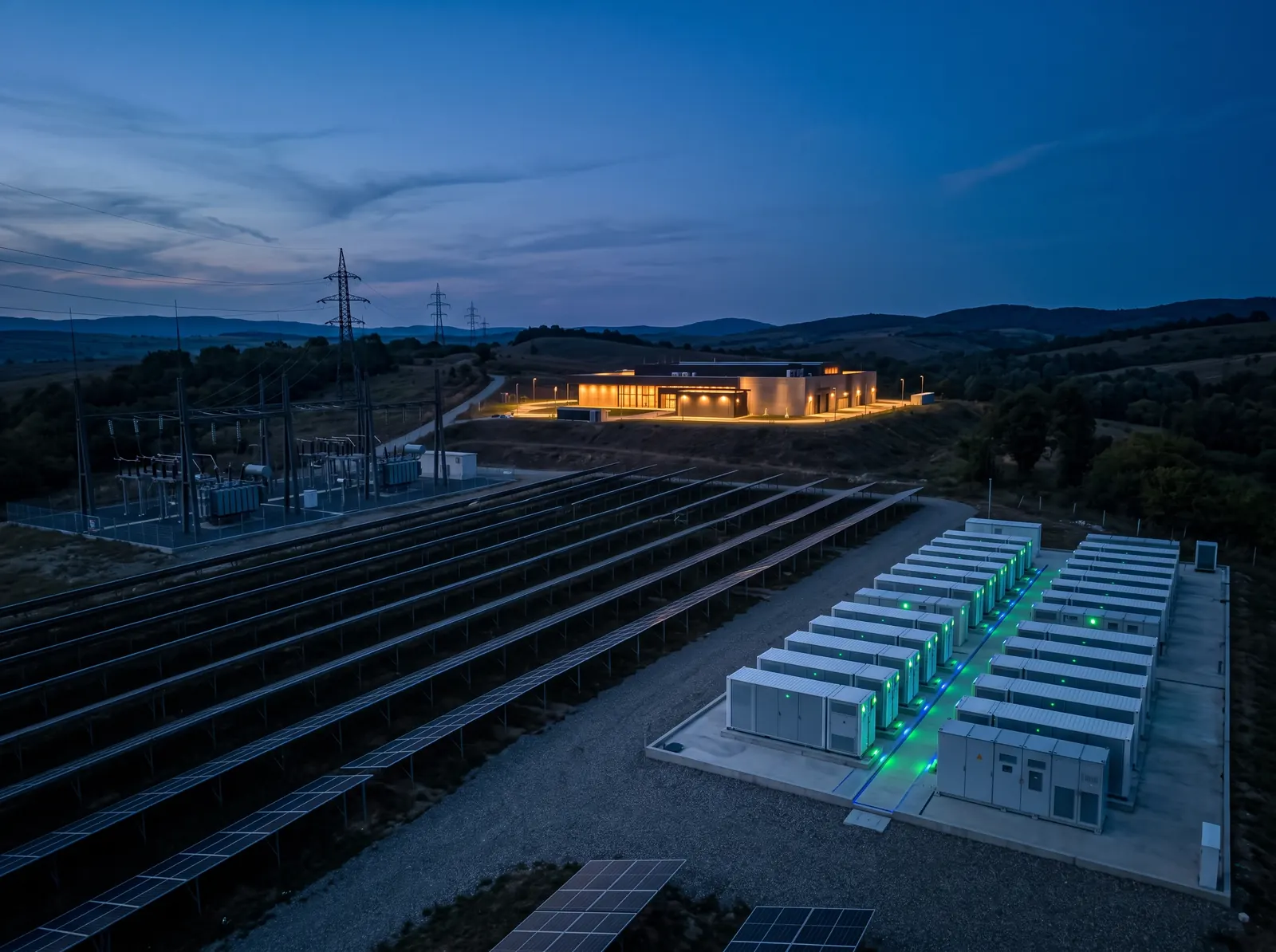
Grid-connected battery storage and photovoltaic infrastructure at blue hour
Portfolio comparison

Three technologies. Three stages of development. One consolidated view.

ProjectTechnologyHeadline capacity Development stageInvestmentTarget IRR
Niculițel Solar Utility-scale photovoltaic23.76 MW — Phase I ATR Phase I fully permitted, ready to build€59 M27.41%
Tulcea Wind Onshore wind farm151.8 MW — 23 turbines Phase I approvals complete; Phase II is the route to RTB≈ €195 M≈ 29.9%
I.C. Brătianu Solar + Storage Photovoltaic with battery storage1 GWh storage · 250 MWh solar Approvals sequence under wayNot published≈ 16.67%*

* Solar generation only. All figures as published by Aurora Renewables; projections and indicative estimates.

Target internal rate of return, by project

Each project carries its own stage and risk profile. The returns are not directly equivalent.

0% 10% 20% 30% Tulcea Wind — target investor IRR approximately 29.9% Tulcea Wind 29.9% Niculițel Solar — target IRR 27.41% Niculițel Solar 27.41% I.C. Brătianu — approximately 16.67%, solar generation only I.C. Brătianu 16.67% solar only
How to read the comparison. Tulcea Wind carries the highest published target in this view at approximately 29.9%, followed by Niculițel Solar at 27.41%. The I.C. Brătianu figure applies to solar generation only, so the three returns are not directly equivalent.
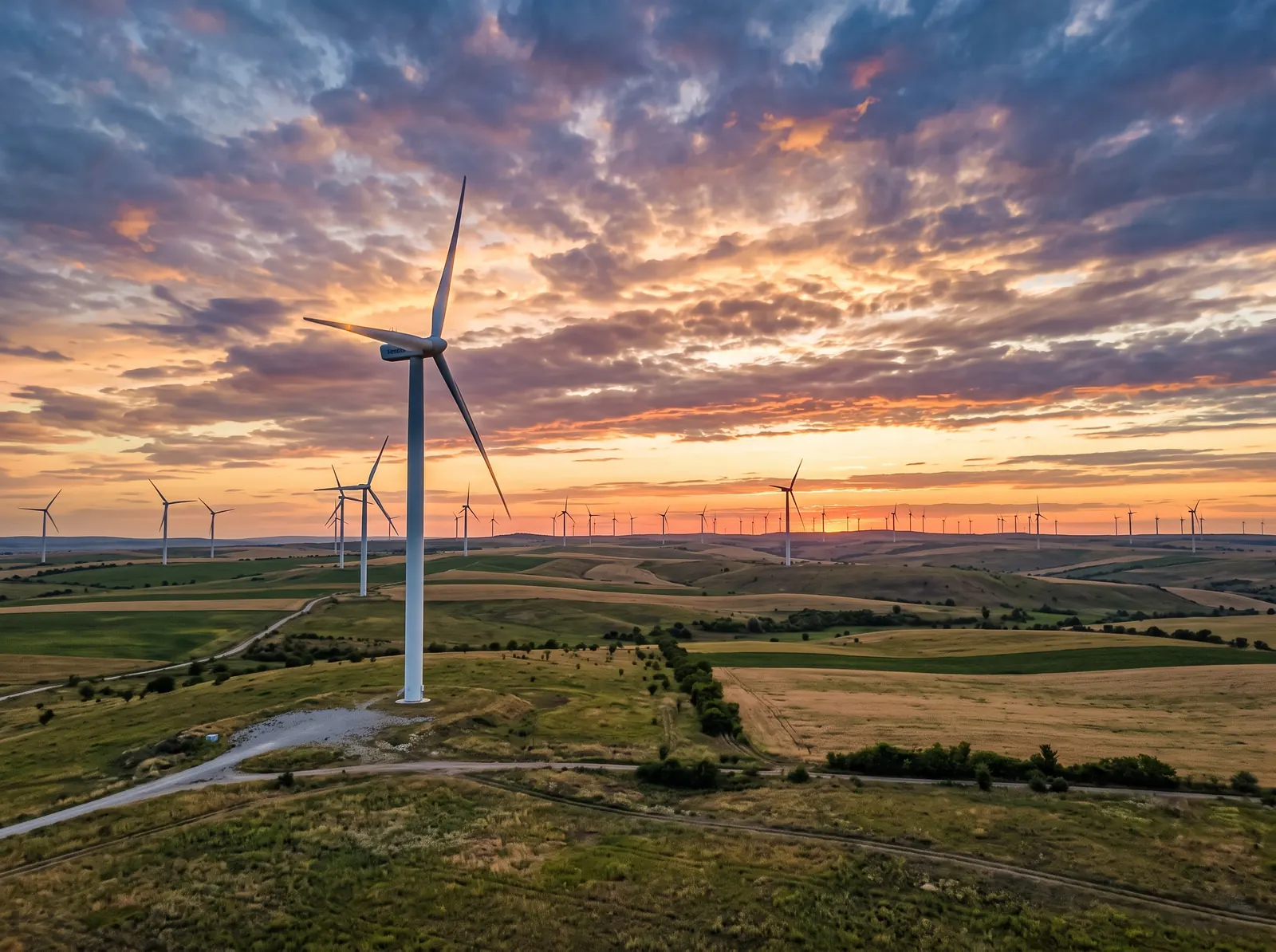
Modern onshore wind turbines across open terrain in Tulcea County at sunset
02 — The region

Why the wind blows here, and why it matters.

All three projects sit in Tulcea County, in Romania's south-east. That is not a coincidence of the portfolio — it is the reason the portfolio exists.

Tulcea fronts the Black Sea and contains most of the Danube Delta. Across the plateau where the projects sit there is very little to break the airflow, and sea and delta together drive the regional climate, and the result is a wind regime that is consistent rather than merely strong — which is what matters when a turbine has to run for a quarter of a century and more.

Aurora measures it rather than assumes it, and has been doing so since 2008, when a 60-metre mast began collecting data at the Tulcea Wind site — a wind record now approaching two decades. Average wind speed at 60 metres is 6.12 m/s, air density 1.225 kg/m³, mean annual temperature 14.1 °C, with a dominant flow along a north-east to south-west axis. A 100-metre measurement mast was installed in 2023 to match modern hub heights and sharpen the yield model.

The same geography serves the solar assets: flat consolidated land, established transmission access, and surrounding land use that is agricultural rather than residential — which keeps planning constraints low and setback distances comfortable.

01

6.12 m/s at 60 m

Measured, not modelled. Backed by a 100-metre mast installed in 2023 and validated to industry practice.

02

One county, three assets

Same grid, same authorities, same permitting path, same team. Concentration is what makes the portfolio legible.

03

Agricultural surroundings

Limited residential development around all sites — fewer planning constraints and appropriate turbine siting distances.

Romanian wind stalled for five years. It started moving in 2025, and it has not stopped.

Installed wind capacity in Romania sat at roughly 3.0 GW from 2020 through 2024. Then it moved: 330 MW was added in 2025, and Transelectrica reported a further 496 MW connected during 2026 by late August — taking the country to approximately 4.0 GW.

WindEurope's build-out projection puts Romania near 6.1 GW by 2030. That leaves roughly 2.1 GW still to be built.

Tulcea Wind, at 151.8 MW, is around 7% of everything the country is still expected to add — held by a single project, in a single county.

2020 – 2024 · STALLED Installed wind capacity 2020 to 2024 — approximately 3.0 GW 3.0 GW TODAY (AUG 2026) Installed wind capacity today — approximately 4.0 GW 4.0 GW +826 MW since 2025 PROJECTED 2030 Projected installed wind capacity by 2030 — approximately 6.1 GW, of which Tulcea Wind is 151.8 MW 6.1 GW
Tulcea Wind — 151.8 MW, ≈7% of the 2.1 GW still to build
Sources: WindEurope (2025 additions and 2030 outlook); Transelectrica, 21 August 2026 (2026 connections). The 2030 figure is a projection, not a commitment.
03 — The case

Why partner with Aurora Renewables

The portfolio is concentrated by design: one operator, one region, three complementary technologies, and a pipeline that has already cleared its hardest regulatory milestones on the lead asset.

01

Permits cleared, not promised

Niculițel Solar holds a completed grid connection study, zoning plan, environmental permit, CTE approval, Phase I ATR for 23.76 MW and a Phase I building permit — all completed in or before October 2023. Phase I is described as fully permitted and ready to enter construction.

02

Three entry points, one counterparty

One asset ready to build. One with Phase I approvals complete and a defined route to ready-to-build. One structured as an integrated energy hub still moving through approvals. Capital can enter where its risk appetite fits, without changing operator.

03

Land and grid already secured

Niculițel holds a long-term land lease on a single consolidated parcel, with established transmission access and a grid connection study confirming technical feasibility. Tulcea Wind sits on long-term leases and connects using existing grid assets, which reduces development complexity.

04

Built for where demand is going

I.C. Brătianu pairs photovoltaic generation with 1 GWh of battery storage to deliver firm, dispatchable power, with behind-the-meter supply designed for hyperscale data centres and proximity to major European fibre-optic backbones.

Project 01 · Utility-scale photovoltaic

Niculițel Solar

A utility-scale photovoltaic power plant in Niculițel Commune, structured for phased delivery across four development phases — a structure Aurora describes as maintaining flexibility for investors and development partners, not merely as an engineering convenience.

The plant sits on a single consolidated land parcel held under long-term lease. The terrain is predominantly flat, which minimises civil works and simplifies long-term management. Grid connection studies are complete and confirm technical feasibility through a high-voltage transmission line with capacity for the planned output.

It is the most advanced asset in the portfolio, and the only one with a published ready-to-build purchase price — which makes it the most direct route in for an investor who wants to acquire a permitted asset rather than fund a development process.

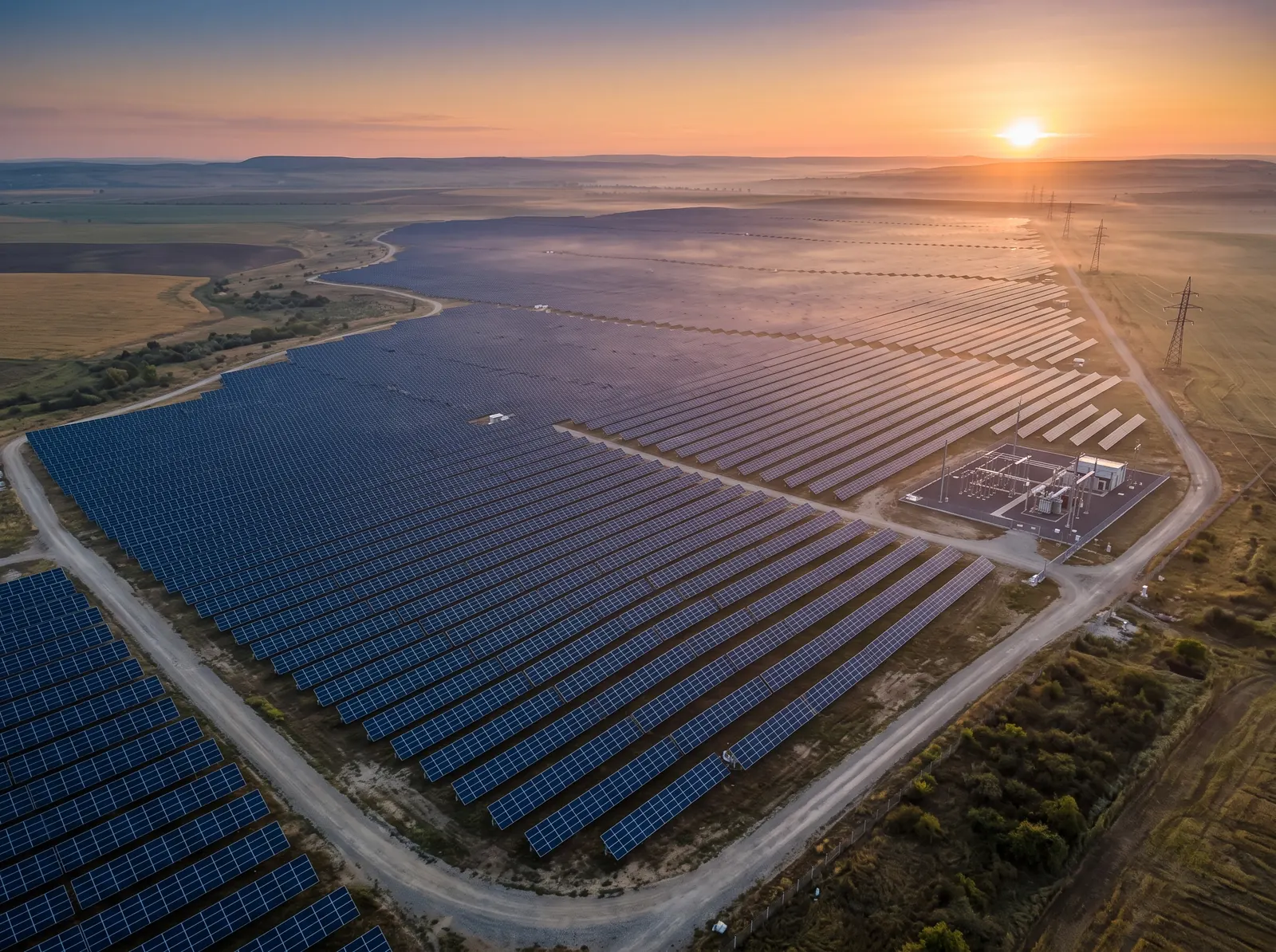
Utility-scale solar photovoltaic arrays on flat open land at sunrise
LocationNiculițel, Tulcea County
Phase I capacity (ATR)23.76 MW
Development modelFour phases
LandSingle parcel, long-term lease
GridHigh-voltage transmission
Phase I statusReady to build

Permitting completed

Grid connection studyCompleted
PUZ — zoning planCompleted
Environmental permitCompleted
CTE meetingCompleted
ATR Phase I — 23.76 MWOct 2023
Building permit Phase IOct 2023

Solar irradiation has been applied conservatively in performance modelling to ensure realistic output expectations. The seasonal profile is predictable, which supports reliable forecasting.

Financial summary

Target IRR27.41%
Total investment€59 million
Investment per MW€590,000
EPC & turnkey cost€47.5 million
Ready-to-build purchase price€11.5 million
Debt terms4% over 15 years

Capital structure

Equity — €11.8 million, 20% Debt — €47.2 million, 80%, at 4% over 15 years Equity 20% €11.8 M Debt 80% €47.2 M · 4% · 15 years

All financial figures are projections and may vary depending on market conditions, regulatory changes, and final technical configurations.

Request the Niculițel Solar information pack
Project 02 · Onshore wind

Tulcea Wind

An onshore wind farm of 151.8 MW across 23 modern turbines of approximately 6.6 MW each, built for utility-scale, long-term operation over a published asset life of 25 years and more. Turbine placement has been set against local topography, prevailing wind directions and infrastructure access.

Development risk is the central argument here, and Aurora states it plainly: completing Phase I approvals and progressing through Phase II permitting significantly reduces development risk, positioning the project to achieve ready-to-build status and enhancing bankability.

Construction logistics lean on what is already there. Existing agricultural roads provide the basis for site access and will be upgraded as required for component transport, with the European road E87 (DN22) approximately 2.5 km from the project area. The grid connection runs at 110 / 20 kV to a substation roughly 7 km away, using existing network assets — which reduces complexity and supports timely commissioning.

Modern wind turbines across open terrain at sunset in Tulcea County
LocationTulcea County
Installed capacity151.8 MW
Turbines23 × ≈6.6 MW
Hub height / rotor≈165 m / ≈170 m
Grid connection110 / 20 kV · ≈7 km
Asset life25+ years
Mean wind speed (60 m)≈ 6.12 m/s
StagePhase I complete
Phase I — completed

Six approvals in hand

Urbanism Certificate · Environmental Permit · Building Permit · Land Use Authorisation · Grid Connection Agreement · Grid Connection Permit (ATR).

Phase II — the route to RTB

Six approvals remaining

Final Grid Connection Agreement · Detailed Electrical Design Approval · Construction Permit · Aviation & Radar Clearances · Environmental Compliance Confirmation · Health & Safety Approvals.

Estimated annual energy production

GROSS Annual gross energy production — approximately 508,308 MWh 508,308 MWh NET less losses ≈ 28,526 MWh (−5.61%) Annual net energy production — approximately 479,782 MWh 479,782 MWh
Wake losses across the wind farm are estimated at approximately 5.61%. Estimates also incorporate electrical losses, availability assumptions and other operational considerations.

Financial summary

Target investor IRR≈ 29.9%
Total project CAPEX≈ €195 million
Equity contribution≈ €58.5 million
Debt financing≈ €136.5 million
Equity payback period≈ 5 to 7 years

Capital structure

Equity — approximately €58.5 million, 30% Debt — approximately €136.5 million, 70% Equity 30% ≈ €58.5 M Debt 70% ≈ €136.5 M

All financial figures are indicative and subject to change based on final technical design, market pricing, and financing terms.

Request the Tulcea Wind information pack
Project 03 · Solar with battery storage

I.C. Brătianu Solar + Storage

A large-scale photovoltaic development conceived as an integrated energy hub: solar generation paired with 1 GWh of battery energy storage, capable of delivering firm, dispatchable power rather than intermittent output.

The storage layer supports load balancing, peak shaving and continuity of supply — the conditions a data centre requires — and reduces curtailment during peak production. The site benefits from proximity to high-voltage transmission lines, regional road networks and major fibre-optic routes, with local zoning favourable to industrial and energy use.

Solar arrays with rows of battery energy storage containers at blue hour
LocationI.C. Brătianu, Tulcea County
Battery storage1 GWh
Solar generation capacity250 MWh
ModelIntegrated energy hub
OwnershipLong-term operational
Lease duration15 years

Three development options, one asset

The project is deliberately not locked to a single commercial model. Aurora publishes three routes, and states the reason: this flexibility allows the asset to adapt over time as energy markets, regulation, and demand profiles evolve.

Option 01

Grid-focused generation

Electricity exported to the national transmission network, with battery storage supporting grid balancing and price optimisation.

Option 02

Integrated solar and storage

Time-shifting of generation, participation in ancillary services, and enhanced revenue stability from the combined operation.

Option 03

Direct supply to data centres

Behind-the-meter supply to large consumers, supporting long-term power agreements, price certainty and corporate sustainability objectives.

Financial summary

Target IRR — solar generation only≈ 16.67%
Lease duration15 years
Investment modelLong-term operational ownership
Revenue structureMulti-layered

Financial modelling applies conservative assumptions relating to energy pricing, system performance and operating costs, with sensitivity analyses supporting investment decision-making.

What is not published, and why

Project CAPEX and a ready-to-build price are not published for this asset. Both are addressed during advanced development and negotiation phases. The published target IRR covers solar generation only and does not include the storage or direct-supply revenue layers.

Approvals follow a defined sequence, with execution approvals and permits still to be completed before ready-to-build status. Development is structured in five phases: site identification and feasibility; permitting and development; ready-to-build; construction and commissioning; then operations and optimisation.

Request the I.C. Brătianu information pack
Executives reviewing project plans and performance charts with a wind and solar landscape visible beyond the glass
04 — What happens next

You will be talking to the people who developed the asset.

Technical material first, direct access to the development team next, and a focused review of the selected asset.

1

You tell us which asset

Send the form with the project you are interested in, or the full portfolio. It reaches the development team directly.

2

We reply with the project pack

Technical and financial documentation for the selected project, at the level of detail your review requires.

3

We schedule a technical call

Permits, grid, timeline and commercial structure — discussed with the people who did the work.

05 — Contact

Request project information

Tell us which project you would like to review. We respond from the development team, not from a call centre.